Direct-to-Film (DTF) Printing: The Versatile, On-Demand Revolution for Global Apparel Businesses

Subtitle: Print vibrant, durable designs on virtually any fabric — cotton, polyester, nylon, denim, and more — with no pretreatment, no minimums, and limitless creative freedom.
The custom apparel industry is experiencing a seismic shift. Direct-to-Film (DTF) printing has emerged as the dominant technology for modern, on-demand garment decoration . The global market for DTF printing surpassed USD 2.7 billion in 2024 and is projected to approach USD 4 billion by 2030, driven by a compound annual growth rate of approximately 6% . Industry analysts estimate global DTF installations will jump from roughly 9,000 active devices to more than 15,000 by 2027 .
Whether you’re a print shop in London, a sportswear brand in Australia, or an e-commerce seller in Singapore, DTF printing offers unmatched flexibility, quality, and profitability — without the traditional barriers of entry.
What Is DTF Printing?
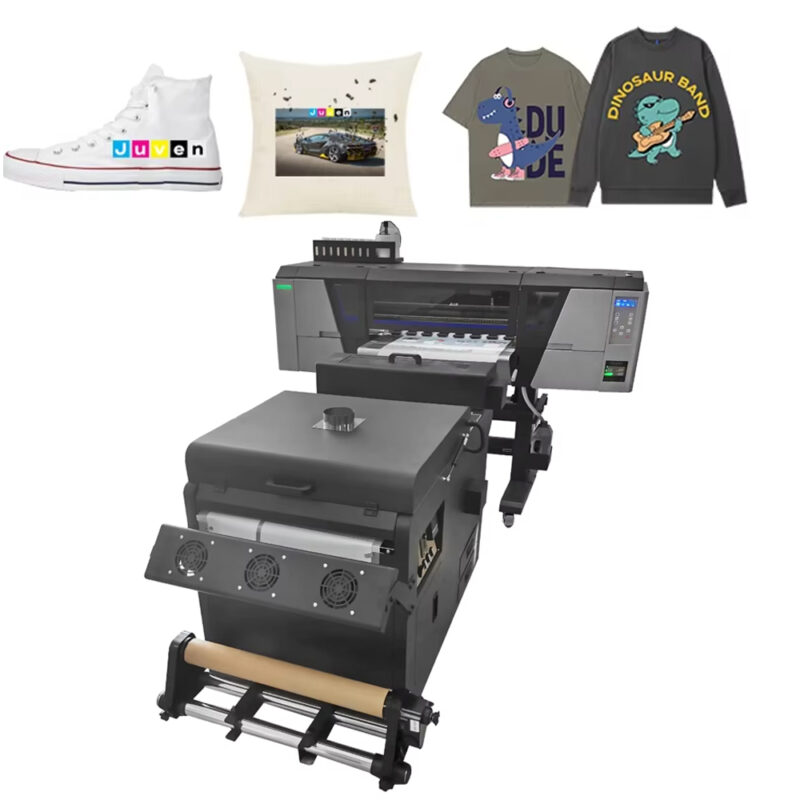
Direct-to-Film printing involves printing a design onto a special transfer film using water-based inks, applying a hot-melt adhesive powder, curing it, and then heat-pressing the design onto the garment . The entire process takes just a few minutes per garment .
Unlike DTG, which requires pretreatment and works best on cotton, DTF works seamlessly on almost any fabric — cotton, polyester, denim, nylon, rayon, and blends — as well as light and dark materials . It can even be applied to surfaces such as leather, wood, glass, and metal, dramatically expanding your product offerings .
Why “Print-Then-Press” Changes Everything
The separation of film printing from heat application unlocks a transformative workflow: print transfers in quantity when your printer is available, store them, and press on demand based on orders . This modular approach removes bottlenecks, allows smaller teams to operate at higher output levels, and enables hybrid fulfillment strategies where fulfillment centers, influencers, and micro-brands can all carry inventory in transfer form rather than finished goods .
Why Global Customers Are Choosing DTF
- Fabric Versatility — Say “Yes” to Every Customer
DTG limits you to mostly cotton. Screen printing requires different emulsions and setups. DTF works on virtually everything :
· ✅ Cotton and cotton blends
· ✅ Polyester and sportswear fabrics
· ✅ Denim and nylon
· ✅ Rayon and silk
· ✅ Treated leather
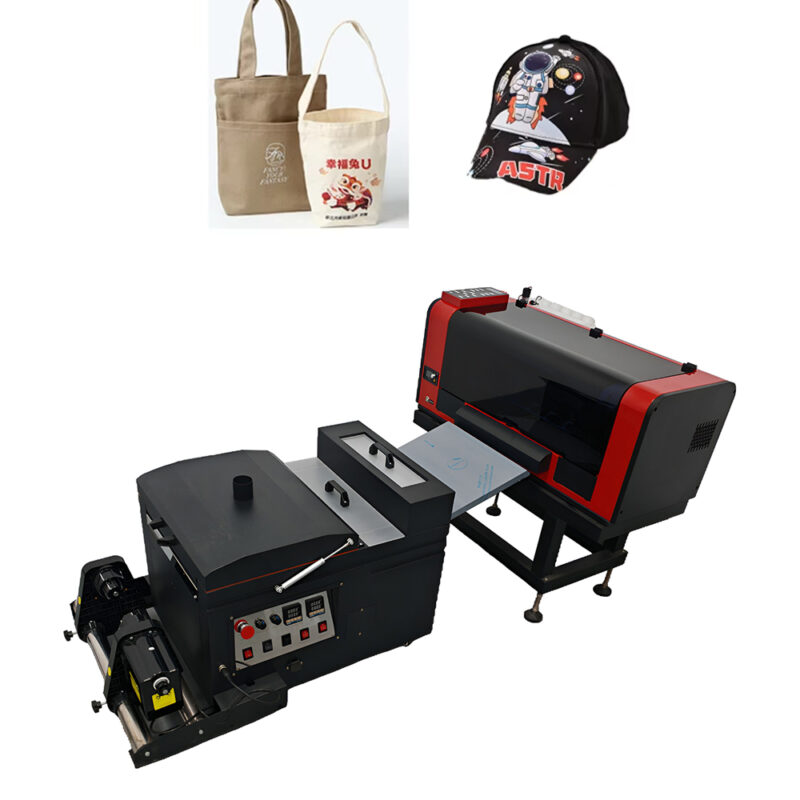
· ✅ Canvas and tote bags
· ✅ Dark and light garments — brilliant white ink opacity on both
This versatility lets printing businesses expand into new markets like sportswear, workwear, branded merchandise, and event apparel — revenue opportunities many were previously missing out on .
- No Pretreatment — Less Mess, Less Time
Unlike DTG, which requires pretreatment chemicals and curing for dark garments, DTF requires none . No spray, no sticky shirts, no inconsistent white patches — just print, powder, press.
- Exceptional Print Quality
Modern DTF printers deliver razor-sharp, colour-intensive prints with excellent colour fidelity . DTF printing supports:
· Photographic images and fine art
· Detailed graphics and small text
· Gradients and smooth transitions
· Full-colour designs without added complexity
While DTF prints have a slight “plastic” feel initially, they wear-in after a few washes, remaining smooth, elastic, and resistant to cracking and fading .
- Print Complexity & Awkward Surfaces
Because DTF separates printing from application, you can place designs on awkward surfaces that DTG cannot handle — zippers, seams, pockets, or shaped items like hats and shoes . DTF is also unmatched for printing photos, intricate details, and colourful designs with strong opacity — especially on dark fabrics .
- Lower Setup Costs
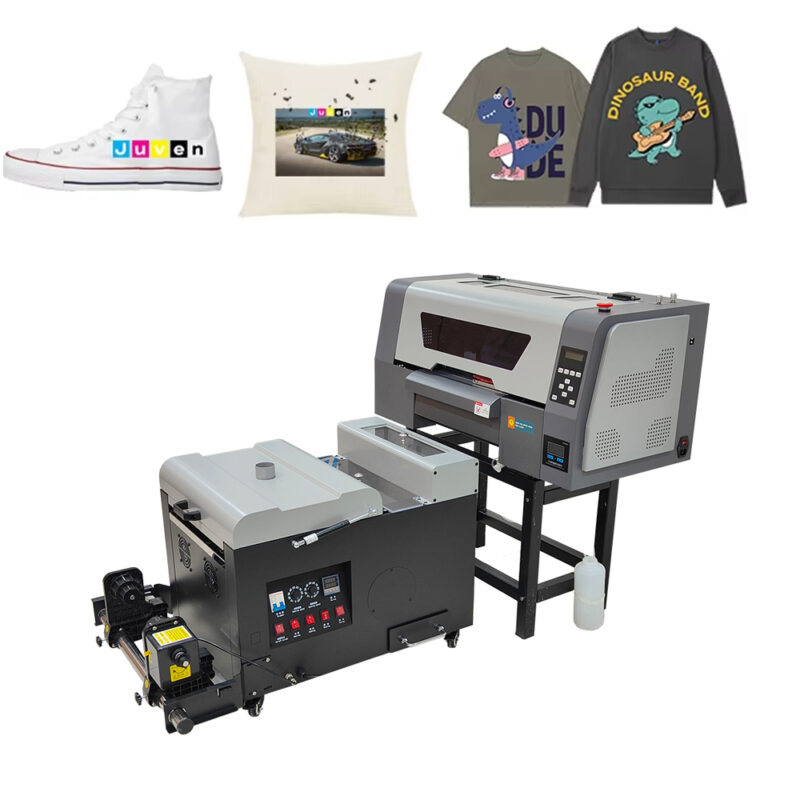
DTG printers require a significant investment, which is only cost-effective for bulk production . DTF printers tend to be less expensive, depending on the model . You also need a heat press and optionally a powder shaker/dryer — but these are economical and can be integrated into automated systems .
- Eco-Friendly — Certified Inks
Leading DTF solutions now use inks and powders with OEKO-TEX® ECO PASSPORT certification, meeting the highest safety standards for human health and environmental protection . The Roland DG TY-300 and Epson SC-G6000 both feature certified inks that guarantee no toxic substances harmful to the human body .
- “If It Can Be Heated, You Can Apply a DTF Design”
As industry professionals say, ‘If the area can be heated, you can apply a DTF design to it’ . This opens possibilities far beyond simple t-shirts — luggage, shoes, glassware, wooden items, metal surfaces, and home décor .
DTF vs. DTG: The Key Differences
Feature DTF Printing DTG Printing
Fabric types Almost all fabrics (cotton, polyester, nylon, denim, leather) Best on 100% cotton, limited on polyester
Pretreatment None required Required for dark garments
Hand feel Slightly raised, smooth, wears in Soft, breathable, seeps into fibers
Awkward surfaces Yes (seams, zippers, shaped items) Limited to flat garment areas
Complex designs Excellent — photos, gradients, fine text Good, but less vibrant on dark
Minimum order 1 piece 1 piece
Equipment cost Lower entry point Higher investment
Ideal business Bulk transfers, varied materials, awkward items Small custom runs on natural fibers
DTG is the gold standard for the softest feel on cotton. DTF wins on fabric versatility, lower cost, complex designs, and the ability to apply prints to awkward surfaces .
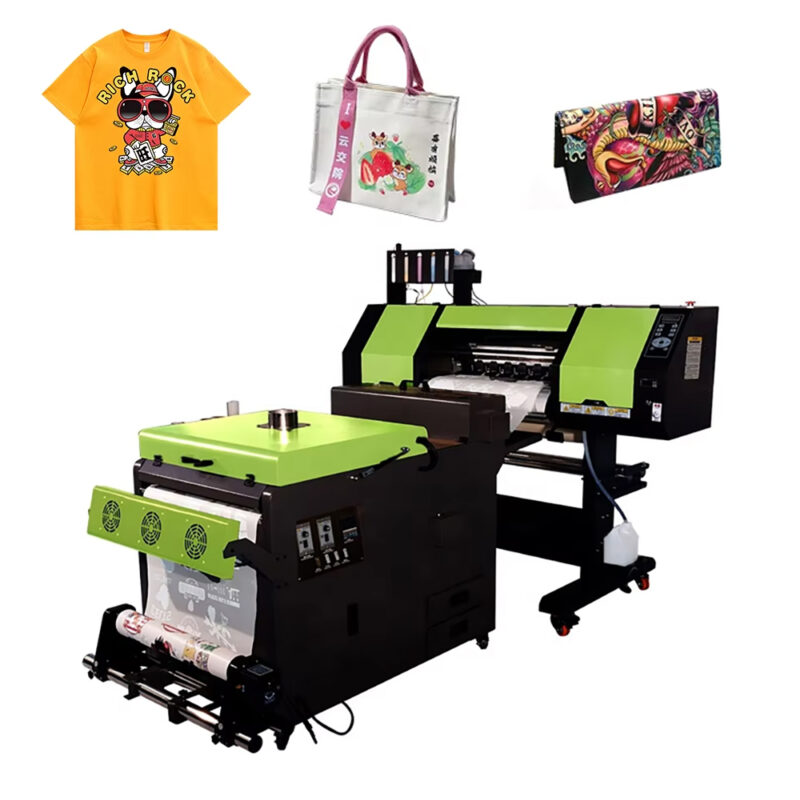
Who Is Buying DTF Printers Worldwide?
Customer Type Typical Applications Why DTF
Sportswear brands Jerseys, shorts, training gear Works on polyester and blends
Print shops Diversify from paper to apparel Low entry cost, minimal skill barrier
E-commerce sellers Print-on-demand via Etsy, Shopify No inventory; pre-print transfers on demand
Promotional companies Corporate branded merch on varied items Material flexibility — bags, shoes, glass
Schools & sports teams Custom uniforms, event gear No minimums, fast turnaround
Fashion labels Limited-run apparel, logo items Print complex designs; wholesale gang sheets
Home décor brands Cushions, aprons, canvas Apply to materials beyond garments
The ROI: How Fast Do You Recover Your Investment?
Equipment Investment (USD)
· Desktop DTF (small start-ups): $5,000 – $15,000
· Production DTF (high volume): $30,000 – $80,000+
Per-Transfer Economics (Gang Sheets)
Desktop DTF machines like the Roland BY-20 can produce gang sheets with multiple images on a single 16″x20″ film, printing in about 10 minutes . One gang sheet can include:
· 1 player’s jersey graphic (front + back) — valued at ~$25
· 6 coaches’ shirt logos — valued at ~$25 each
· 3 hats logos — valued at ~$12 each
Total value per gang sheet: $100+ in profit .
Break-Even Analysis
Machine Type Profit Potential (per hour)
Desktop DTF (BY-20) $500 – $1,000
Production DTF (TY-300) $4,500+
With a production DTF printer like the TY-300, users can generate over $4,500 profit per hour** . Many shop owners also sell gang sheets alone, saving time, labor costs, and inventory expense — wholesale prices can reach **up to $12 per sheet .
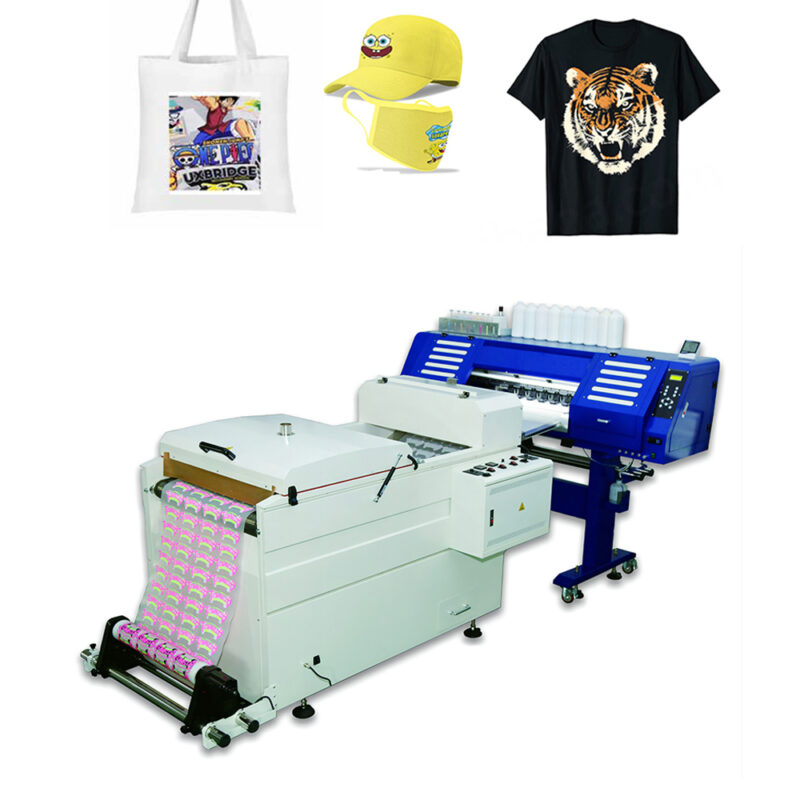
What to Look for When Buying a DTF Printer (Global Buyer’s Guide)
✅ Printhead Technology
· Epson PrecisionCore Micro TFP — industry standard, excellent for DTF
· Newly engineered DTF-specific heads — optimized for white ink flow
· Staggered dual heads — enable higher productivity (e.g., 10.9 m²/h production mode)
✅ White Ink Management
White ink settles and coagulates quickly. Look for:
· Automatic recirculation systems — prevents clogging and ink wastage
· Automatic head cleaning — based on usage frequency
· Nozzle refresher tools — for effective manual cleaning
✅ Certifications (Critical for Global Markets)
· OEKO-TEX® ECO PASSPORT — international standard for textile safety
· GOTS — Global Organic Textile Standard (where applicable)
✅ Production Throughput
· Desktop — suitable for low volume, starting at 50-75 shirts/day
· Production — high-volume continuous operation; ideal for wholesale contracts
· Speed — e.g., Epson SC-G6000: ~5.6 m²/h with CMYK+W; Ricoh D1600: up to 20 m²/h
✅ Powder Shaker & Curing Oven
· Integrated or separate system? Many brands offer dedicated shaker ovens
· Automated powder application reduces labor and improves consistency
✅ Ink Compatibility & Supply
· 1.6L ink pouches or high-capacity bags reduce downtime
· UltraChrome DF inks available for Epson
· S-PG2 inks available for Roland — reduce coagulation and waste
✅ Space & Power Requirements
· Desktop — minimal footprint; suitable for small spaces
· Production — requires more floor space; power requirements (e.g., 220V)
✅ Support & Warranty
· Local dealer network for installation, training, and ongoing support
· Warranty coverage — industry-leading warranties available
· Remote support and user-replaceable parts minimize downtime
✅ Pre-purchase Checklist
· ✅ Get sample prints on YOUR materials (dark/light fabrics, specialty items)
· ✅ Ask for a live or video demo showing speed and quality
· ✅ Verify wash durability (ask for wash-test results, OEKO-TEX certification)
· ✅ Request references from customers in your industry
· ✅ Check ink and powder availability and pricing for your region
· ✅ Confirm voltage compatibility (110V/220V)
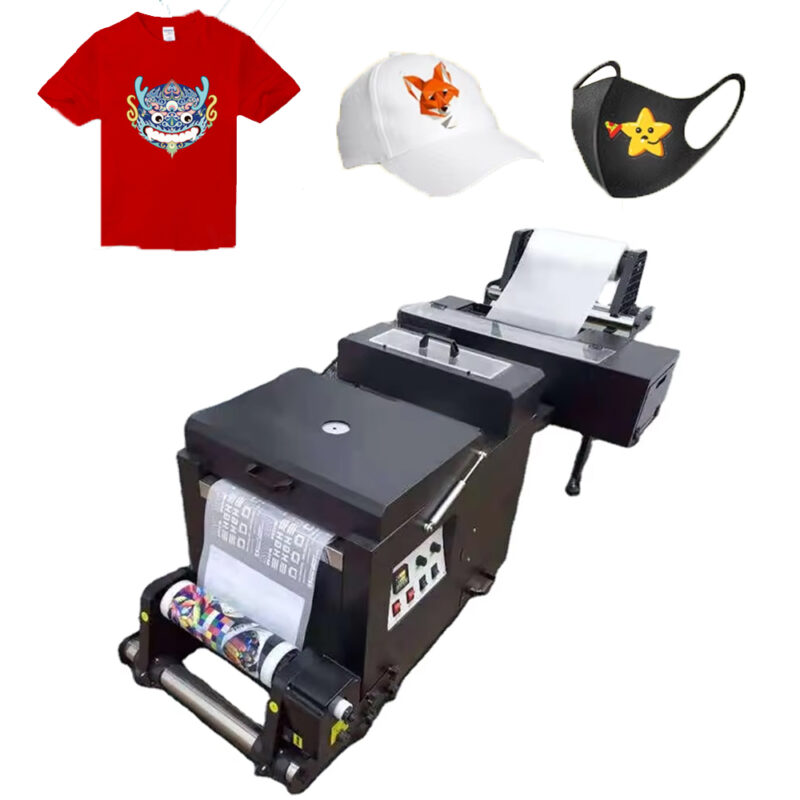
Ready to Capture the Custom Apparel Revolution?
Direct-to-Film printing has transformed garment decoration from a bulk-only, fabric-limited business into an agile, on-demand, virtually unlimited industry . DTF is enabling businesses of all sizes to:
· Say “yes” to every customer — on any fabric, any colour, any quantity
· Expand into new markets — sportswear, workwear, home décor, promotional goods
· Eliminate outsourcing — control timing, quality, and profitability
· Pre-make transfers — store inventory in film form, press on demand
· Print complex designs — photos, gradients, fine text — with vibrant opacity on dark
Stop turning away customers. Start printing on everything.
