DTG Printing: The Future of On-Demand Apparel Decoration

In the dynamic world of custom apparel, speed, quality, and flexibility are the new currencies of success. As consumer demand shifts toward personalization and rapid fulfillment, businesses worldwide are re-evaluating their production methods. Direct-to-Garment (DTG) printing has emerged as a transformative technology that empowers brands, entrepreneurs, and print shops to thrive in this on-demand economy.
What is Direct-to-Garment (DTG) Printing?
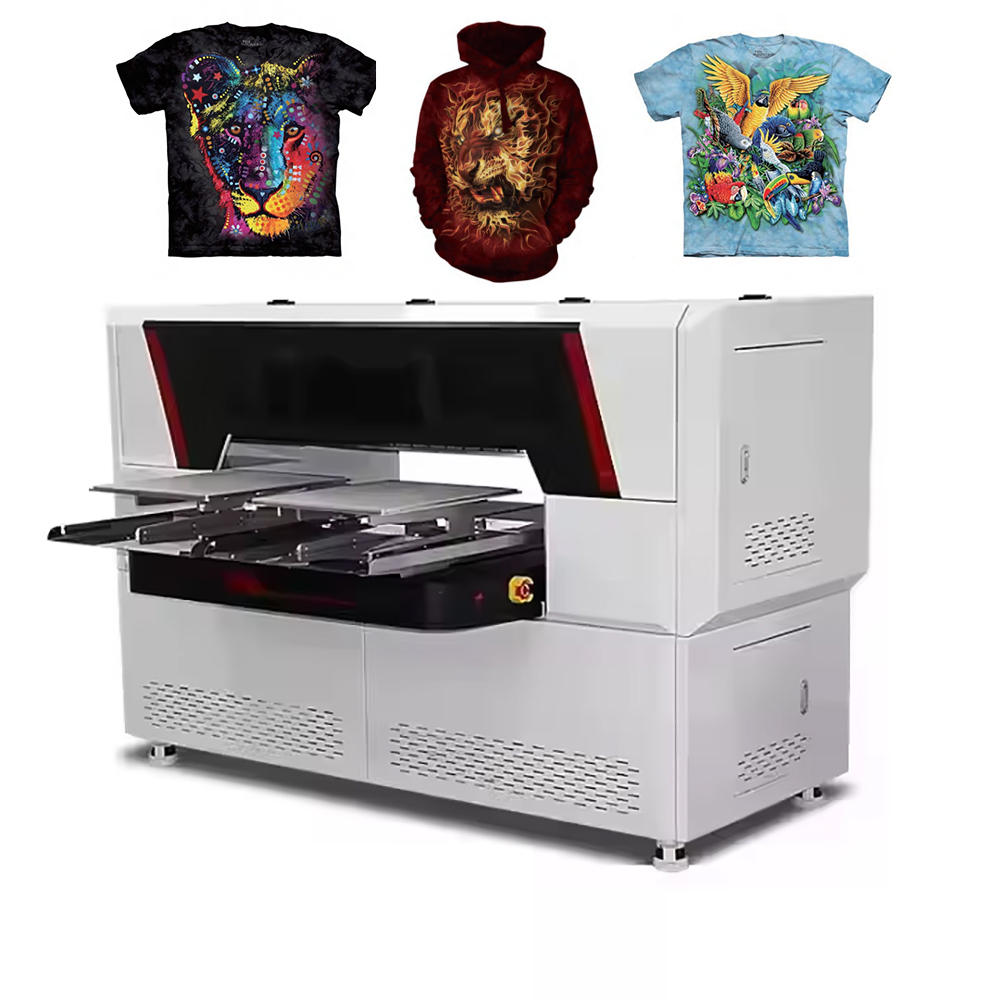
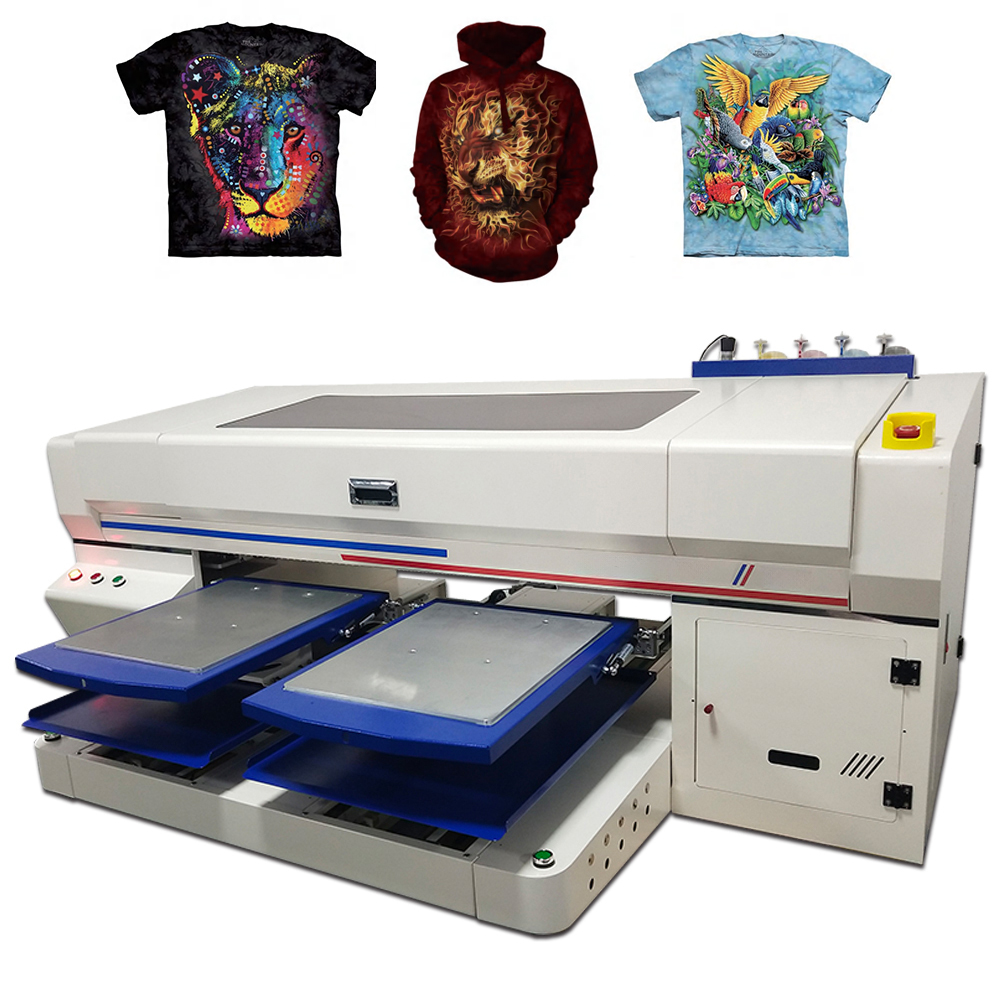
At its core, DTG is a digital printing method that uses specialized inkjet technology to apply water-based inks directly onto textiles. Think of it as a high-quality desktop printer for your t-shirts. It allows for high-resolution, full-color designs with intricate details and photographic quality, with no minimum order requirements—making it perfect for printing a single shirt or testing a new design.
The Advantage of a Soft, Breathable Finish
Unlike traditional methods that leave a heavy layer on the fabric, DTG printing allows the ink to seep into the garment’s fibers. This results in a print that is soft to the touch, highly breathable, and comfortable, even in warm climates. DTG prints won’t crack or peel over time, and when cared for properly, they can withstand over 50 washes.
Unmatched Detail and Color Gamut
DTG technology offers a “nice layout of colors with good definition,” reproducing complex designs that are often impossible with screen printing. It is ideal for artists and businesses looking to create detailed, photographic prints without the constraints of color limitations.
Why DTG is a Smart Business Investment
- No Minimum Orders (The “Print-On-Demand” Dream)
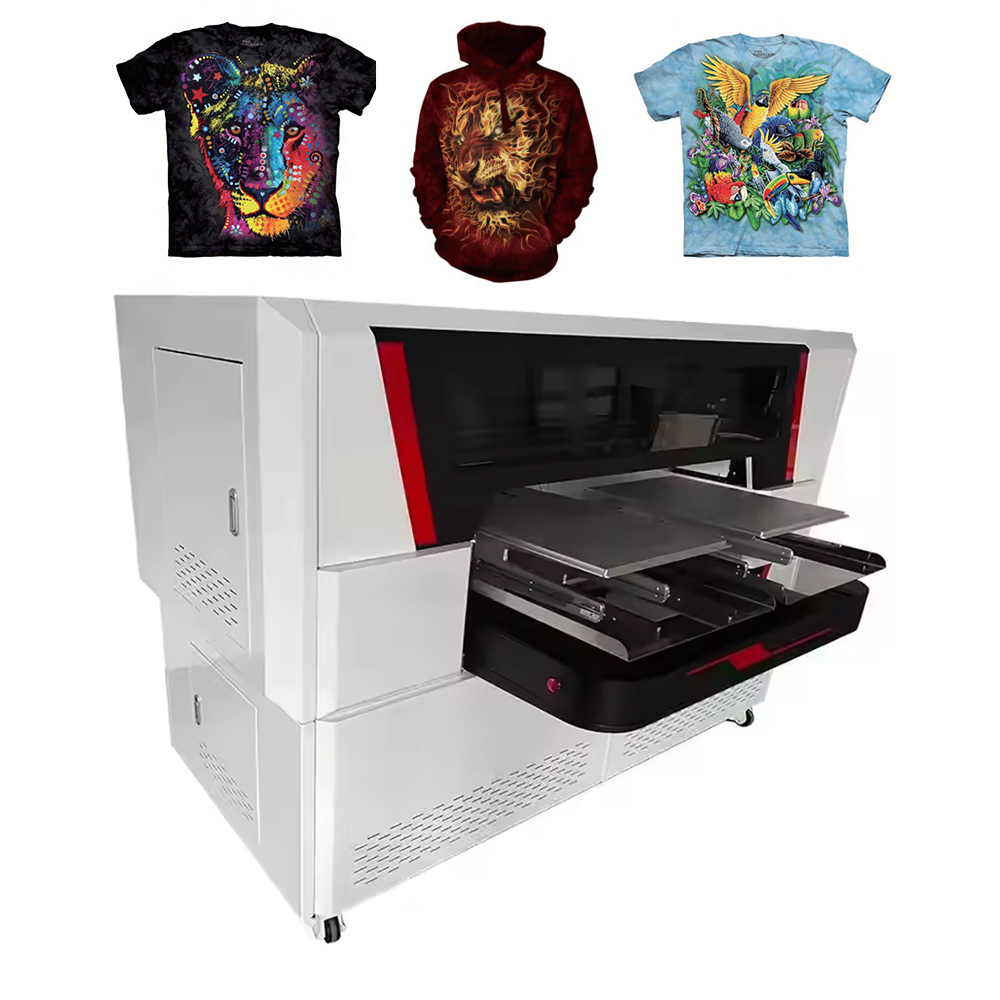
One of the most significant advantages of DTG is the lack of a Minimum Order Quantity (MOQ). Whether you need one shirt or a hundred, each piece can feature a unique design. This is the foundation of the print-on-demand business model, allowing you to eliminate inventory risk and offer limitless variations to your customers.
- Sustainability and Eco-Friendliness
Modern consumers are increasingly eco-conscious. DTG printers utilize water-based inks and highly efficient processes that minimize waste and energy consumption compared to traditional screen printing. This makes it a more sustainable alternative, aligning your business with environmentally friendly practices.
- Adapting to Market Trends
The industry is shifting toward “Smart Manufacturing.” DTG technology aligns with this shift by enabling automation and software integration to streamline workflow. Businesses can quickly respond to fashion trends and consumer demands, offering faster turnaround times and tighter inventory control.
Choosing the Right DTG Machine
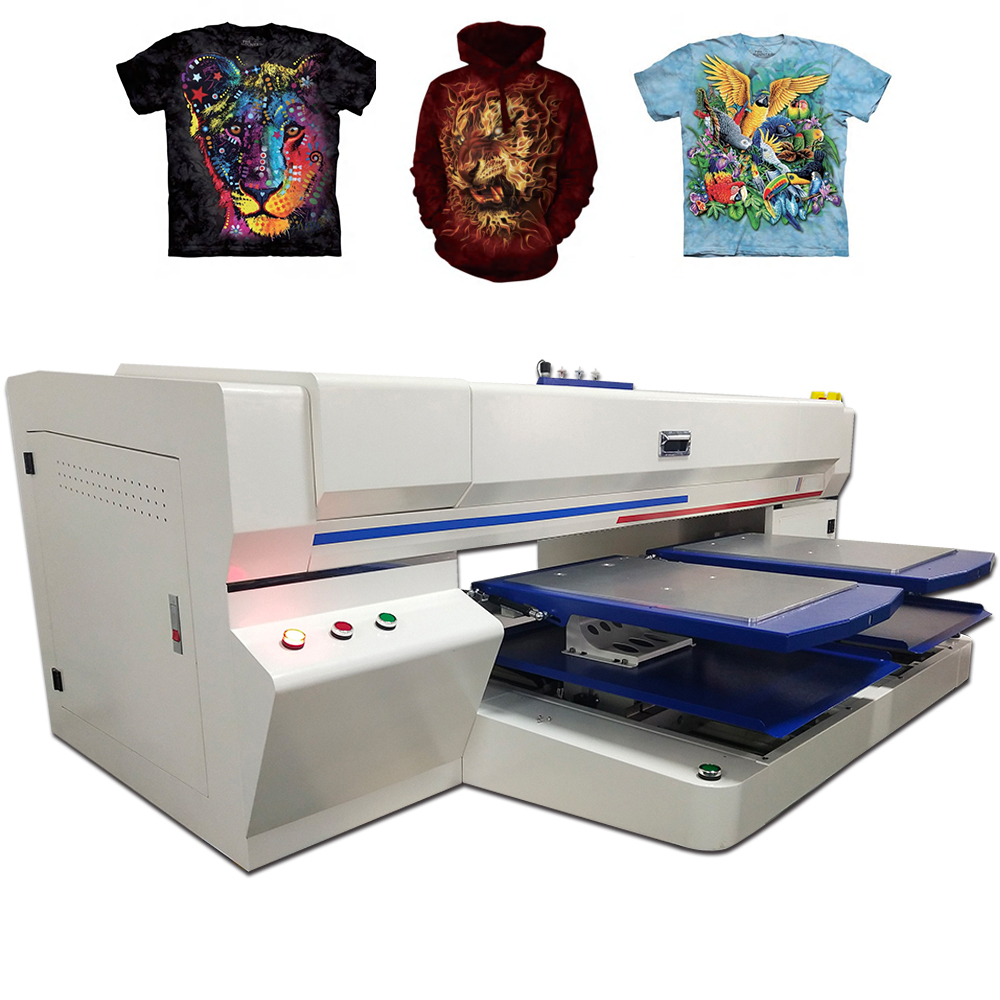
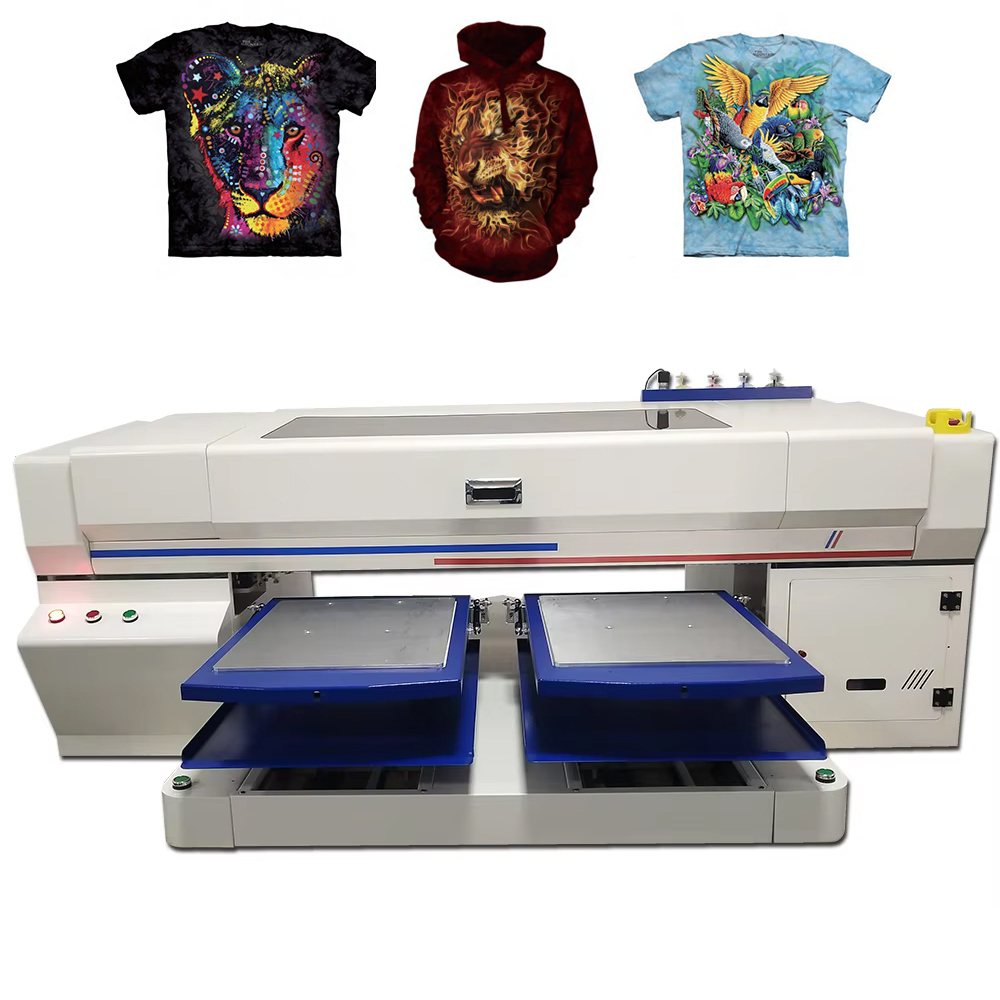
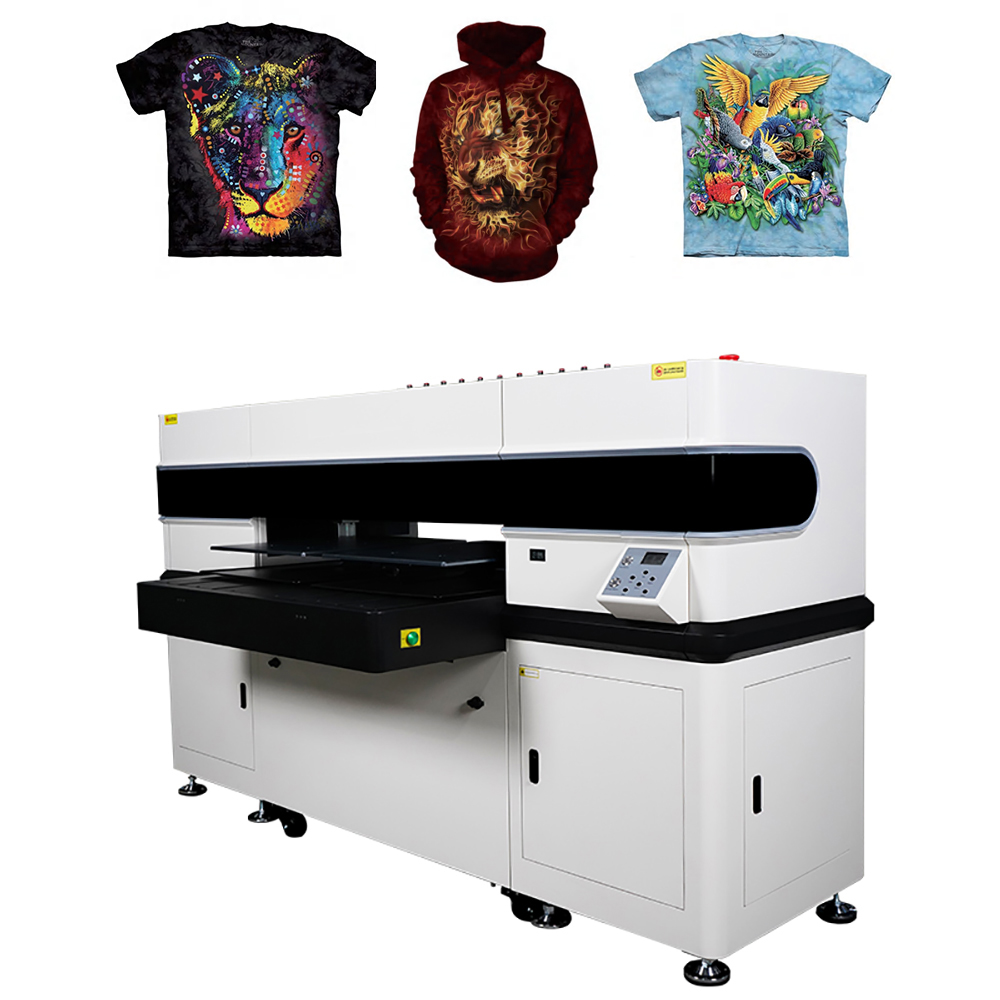
The DTG printer market offers a wide spectrum of solutions, from entry-level models for startups to high-speed industrial systems for volume production. When selecting a machine, consider your target volume and fabric types.
Entry-Level vs. Industrial Systems
For small businesses or single-room storefronts, entry-level models offer a cost-effective entry point. For mass production, industrial systems like the Kornit Apollo can output up to 400 shirts per hour with full automation, managing everything from garment loading to smart curing.
The Compatibility Factor
While DTG works best on natural fabrics like 100% cotton and linen, technological advancements are expanding compatibility with synthetic blends. Many machines now feature multi-printhead systems (like Epson XP600 or Ricoh Gen 5) for greater efficiency and versatility.
Strategic Sourcing
The global demand for DTG printers has positioned China as a dominant manufacturing hub, particularly in regions like Guangdong, Shanghai, and Hubei. When sourcing suppliers globally, evaluate the “operational reliability metrics” such as on-time delivery rate (aim for ≥90%) and response time (aim for ≤8 hours). Suppliers like Guangdong Rational Digital Technology Co., Ltd. have demonstrated strong operational discipline with a 99% on-time delivery rate, making them suitable for urgent procurement cycles.
DTG vs. DTF: Which is Right for You?
A common industry question is whether to choose DTG or Direct-to-Film (DTF) printing. While both are digital, they serve different purposes:
· DTG is best for soft, high-quality prints on natural fabrics, ideal for 1 to 10 shirts and storefronts.
· DTF involves printing on a film that is heat-pressed onto the garment, resulting in a thicker, “cardboardish” feel. It is more suitable for large production runs of the same graphic or printing on difficult surfaces like zippers and seams.
If your priority is unmatched comfort, custom individual pieces, and breathable quality, DTG is the superior choice.
