Premium Fast Drying Water Based Ink for Carton and Bag Printing

Premium Fast Drying Water Based Ink for Carton and Bag Printing
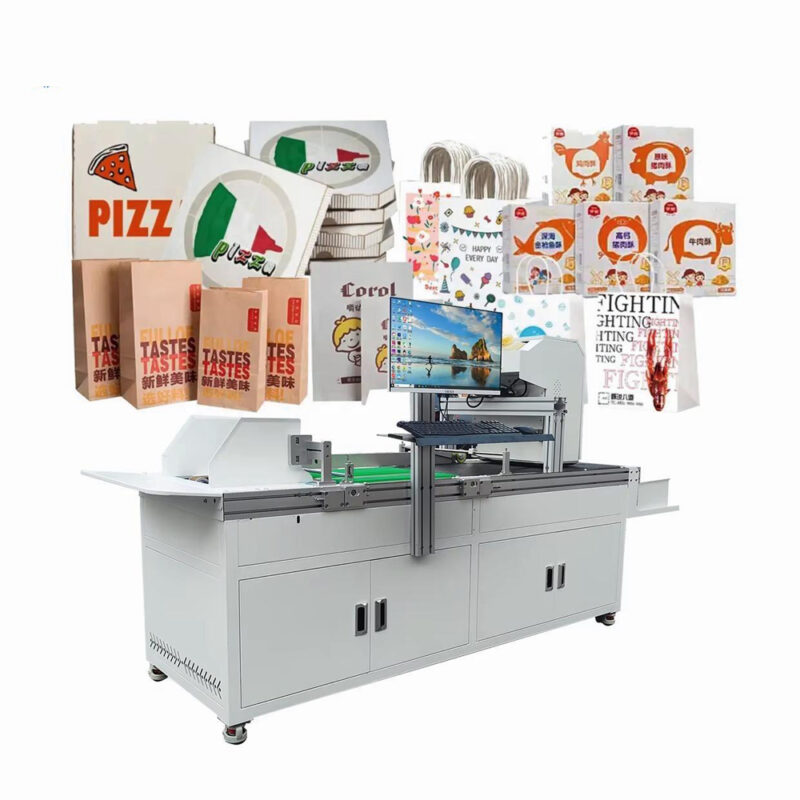
The New Wave of Paper Bag Printing: High Speed and Vivid Color with Water-Based Inkjet
In the competitive world of packaging, paper bags have emerged as a symbol of sustainability. But for brands, a brown paper bag is no longer just a carrier—it is a billboard. As consumers demand eco-friendly solutions, they also demand stunning visuals.
Enter the next generation of industrial water-based inkjet printers. Combining the environmental benefits of water-based chemistry with the speed of industrial machinery and the quality of offset printing, these machines are transforming how paper bags are produced and are capturing the attention of customers worldwide.
Why Water-Based Ink?
The New Wave of Paper Bag Printing: High Speed and Vivid Color with Water-Based Inkjet
In the competitive world of packaging, paper bags have emerged as a symbol of sustainability. But for brands, a brown paper bag is no longer just a carrier—it is a billboard. As consumers demand eco-friendly solutions, they also demand stunning visuals.
Enter the next generation of industrial water-based inkjet printers. Combining the environmental benefits of water-based chemistry with the speed of industrial machinery and the quality of offset printing, these machines are transforming how paper bags are produced and are capturing the attention of customers worldwide.
Why Water-Based Ink?
Traditional packaging printing often relies on solvent-based inks, which emit volatile organic compounds (VOCs). In contrast, aqueous pigment inks are primarily water-based and VOC-free, offering a non-toxic, odorless, and safer working environment .
Modern water-based inks have also solved historical performance issues. Today’s formulations provide superior durability, scratch resistance, and lightfastness, making them robust enough for the rigors of shipping and handling while remaining safe for food contact—as they comply with strict European food safety regulations .
Uncompromising Speed Meets Perfect Color
The primary concern for packaging converters has always been whether “eco-friendly” means “slow.” The latest market innovations prove that is no longer the case.
Blistering Production Speeds
The new era of aqueous inkjet presses is defined by industrial velocity. For narrow-web applications, machines like the Truepress PAC 520P achieve speeds of up to 80 meters per minute on a 520mm wide web . For high-volume sheet-fed operations, the Agfa SpeedSet Orca raises the bar further, outputting up to 11,000 B1 sheets per hour (approximately 150 meters per minute) in Express mode .
Even compact tabletop units are keeping pace, with the AJ-200 reaching 27 meters per minute for short-run, on-demand jobs .
Flawless Color Quality
Speed is meaningless without quality. These industrial printers achieve resolutions of up to 1200 x 1200 dpi, delivering sharp text, smooth gradients, and photographic image quality directly onto kraft and coated papers .
The ability to print variable data and full-color graphics without plates means brands can run hyper-targeted campaigns—different QR codes, regional offers, or seasonal designs—without slowing down the press .
Capturing Global Attention
The global market for water-based inkjet presses is projected to grow from $905 million in 2024 to over $1.2 billion by 2031 . This growth is driven by three key factors that are resonating with customers worldwide:
- Shorter Runs, Quicker Changes
Traditional flexographic printing requires expensive plates and long setup times, making short runs economically unfeasible. Water-based digital printers eliminate plate charges entirely . A brand can print 500 bags for a pop-up event or a regional promotion and switch to a completely different design for the next run in minutes. - Eliminating Lamination and Labels
Historically, high-quality graphics on paper bags required printing on a separate label and then gluing it on, or laminating the paper. Water-based inkjet systems print directly onto the bag substrate . This reduces material costs, streamlines production, and makes the bag easier to recycle at the end of its life—a major selling point for environmentally conscious brands. - The “Just-in-Time” Inventory Model
Warehousing pre-printed packaging is expensive. Water-based digital printers allow converters to print exactly what is needed, when it is needed . This “just-in-time” capability reduces waste, frees up warehouse space, and reduces the risk of packaging becoming obsolete due to design changes.
The Future of the Paper Bag
From tabletop models perfect for local breweries to industrial beasts printing 11,000 sheets an hour for global retail chains, water-based inkjet technology is versatile . It bridges the gap between sustainability and commercial viability.
For converters, investing in these machines means acquiring the ability to offer hyper-customization without sacrificing environmental integrity or throughput. For brand owners, it means finally being able to put full-color, variable packaging into the hands of consumers quickly and responsibly.
As global regulations tighten on single-use plastics and printing emissions, water-based inkjet printing is not just an alternative—it is the inevitable standard for the paper bag of the future.
Speed is meaningless without quality. These industrial printers achieve resolutions of up to 1200 x 1200 dpi, delivering sharp text, smooth gradients, and photographic image quality directly onto coated papers .
The ability to print variable data and full-color graphics without plates means brands can run hyper-targeted campaigns—different QR codes, regional offers, or seasonal designs—without slowing down the press .
Capturing Global Attention
The global market for water-based inkjet presses is projected to grow from $905 million in 2024 to over $1.2 billion by 2031 . This growth is driven by three key factors that are resonating with customers worldwide:
- Shorter Runs, Quicker Changes
Traditional flexographic printing requires expensive plates and long setup times, making short runs economically unfeasible. Water-based digital printers eliminate plate charges entirely . A brand can print 500 bags for a pop-up event or a regional promotion and switch to a completely different design for the next run in minutes. - Eliminating Lamination and Labels
Historically, high-quality graphics on paper bags required printing on a separate label and then gluing it on, or laminating the paper. Water-based inkjet systems print directly onto the bag substrate . This reduces material costs, streamlines production, and makes the bag easier to recycle at the end of its life—a major selling point for environmentally conscious brands. - The “Just-in-Time” Inventory Model
Warehousing pre-printed packaging is expensive. Water-based digital printers allow converters to print exactly what is needed, when it is needed . This “just-in-time” capability reduces waste, frees up warehouse space, and reduces the risk of packaging becoming obsolete due to design changes.
The Future of the Paper Bag
From tabletop models perfect for local breweries to industrial beasts printing 11,000 sheets an hour for global retail chains, water-based inkjet technology is versatile . It bridges the gap between sustainability and commercial viability.
For converters, investing in these machines means acquiring the ability to offer hyper-customization without sacrificing environmental integrity or throughput. For brand owners, it means finally being able to put full-color, variable packaging into the hands of consumers quickly and responsibly.
As global regulations tighten on single-use plastics and printing emissions, water-based inkjet printing is not just an alternative—it is the inevitable standard for the paper bag of the future.