DTG Printing Machine with Double Sided Capability and Light Oil Ink

Headline: DTG Printing Machine – Print One Shirt or One Thousand. Zero Setup. Unlimited Colors.
Sub-headline: The on-demand apparel revolution is here. No screens. No minimums. No waste. Just brilliant, soft-hand prints on cotton and blends.
The Global Shift: Why DTG Is Eating the Apparel Decoration Market
From Los Angeles to London, from Melbourne to Manila, the way people buy custom apparel has changed forever.
Old model: Screen print 144 pieces minimum. Wait 2 weeks. Store inventory you may never sell.
New model: Design goes live online. Customer orders one shirt. You print it in 90 seconds. Ship same day.
This is DTG. And it’s why thousands of print shops, Etsy sellers, and aspiring entrepreneurs are buying their first (or second) Direct-to-Garment machine.
What Is DTG Printing?
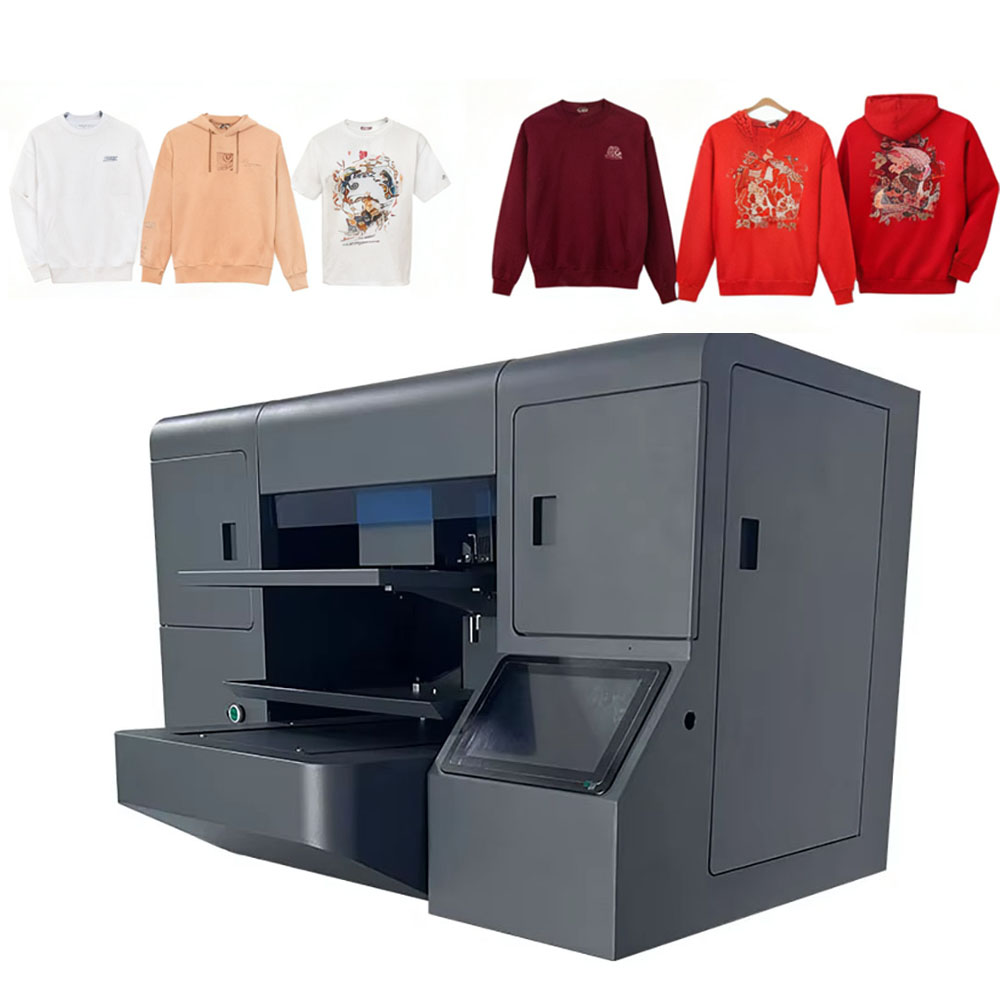
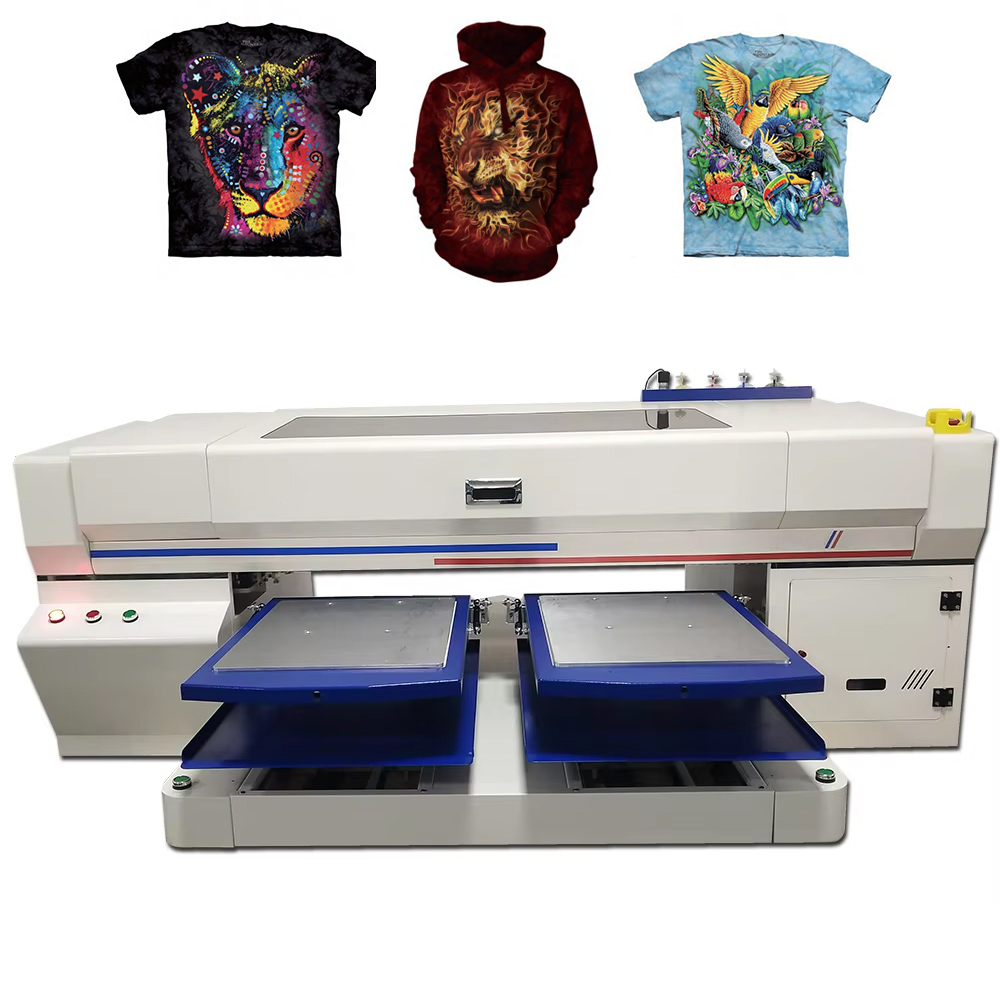
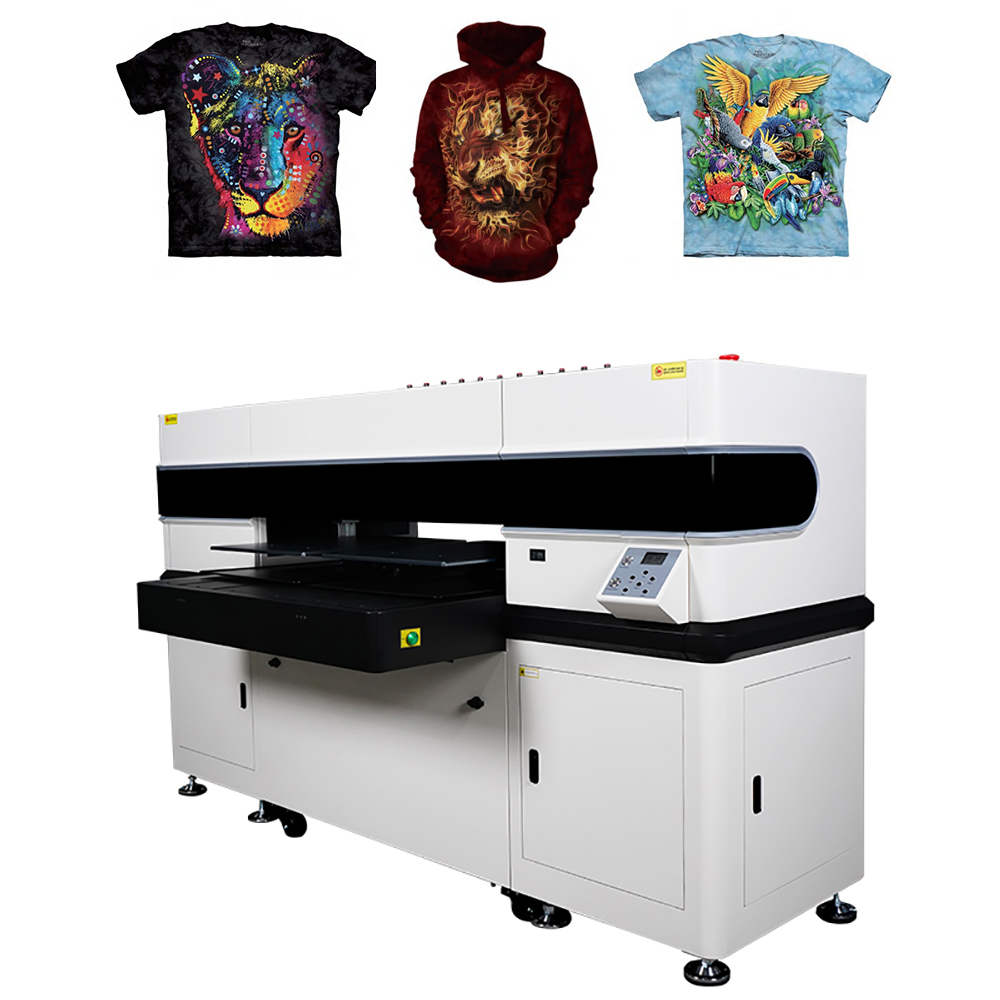
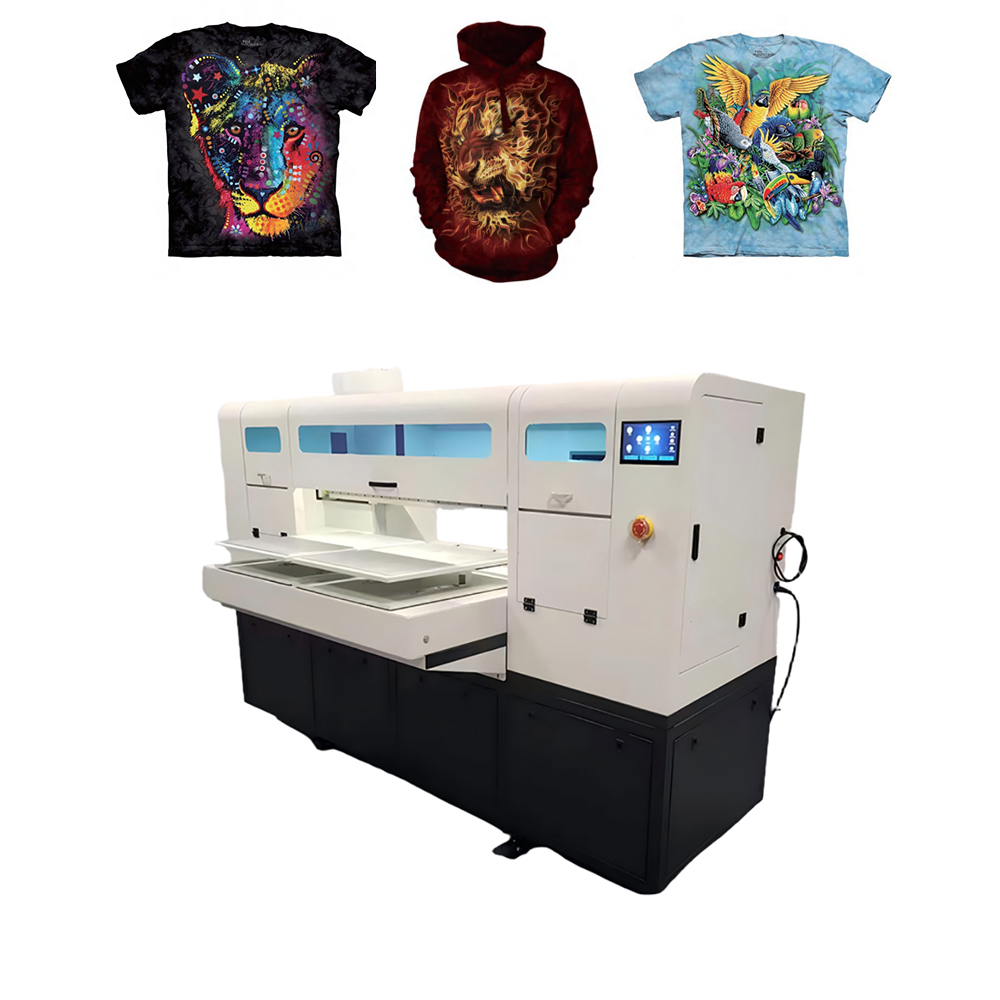
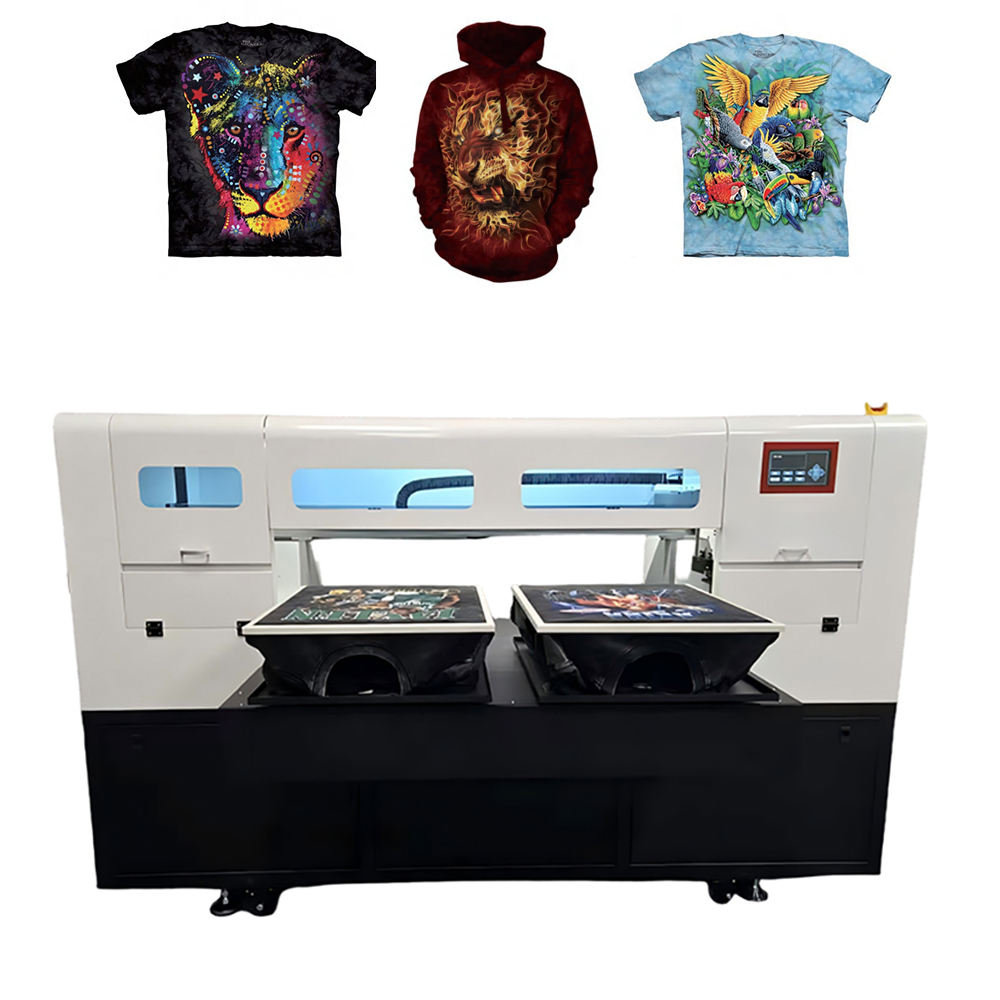
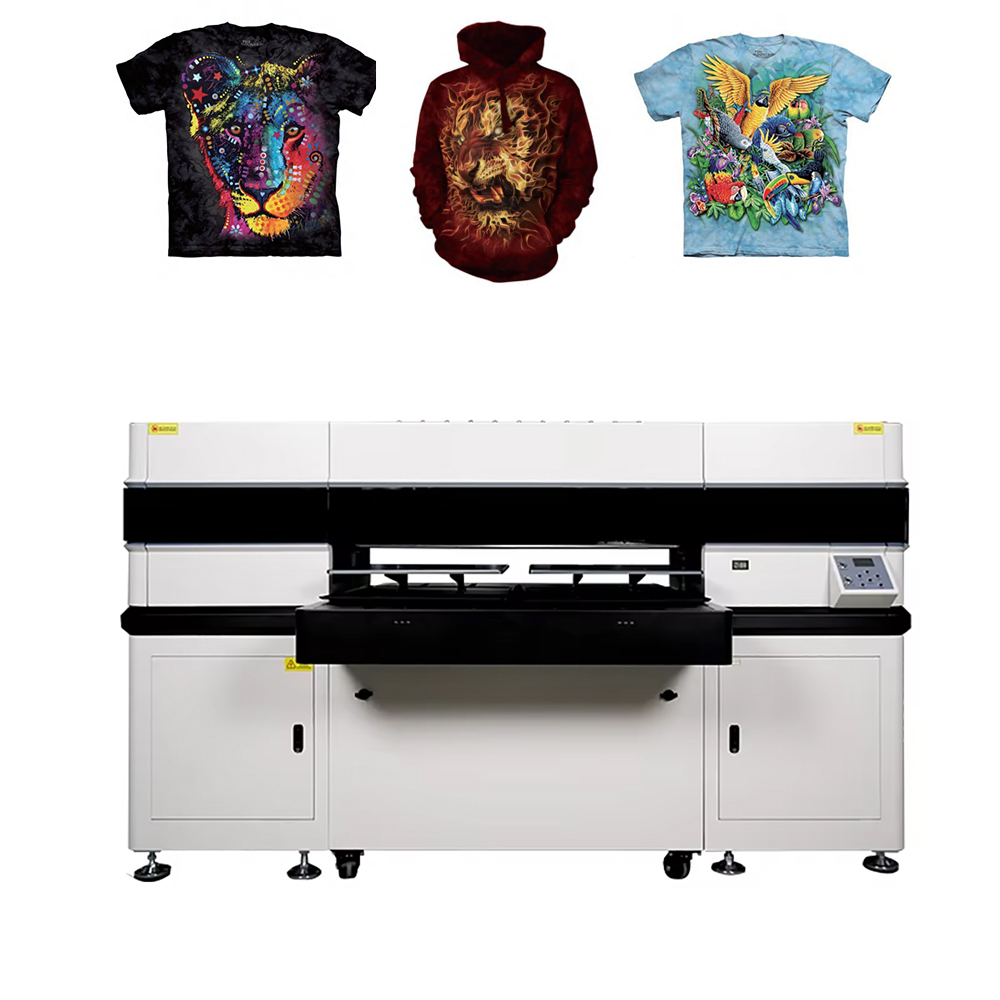
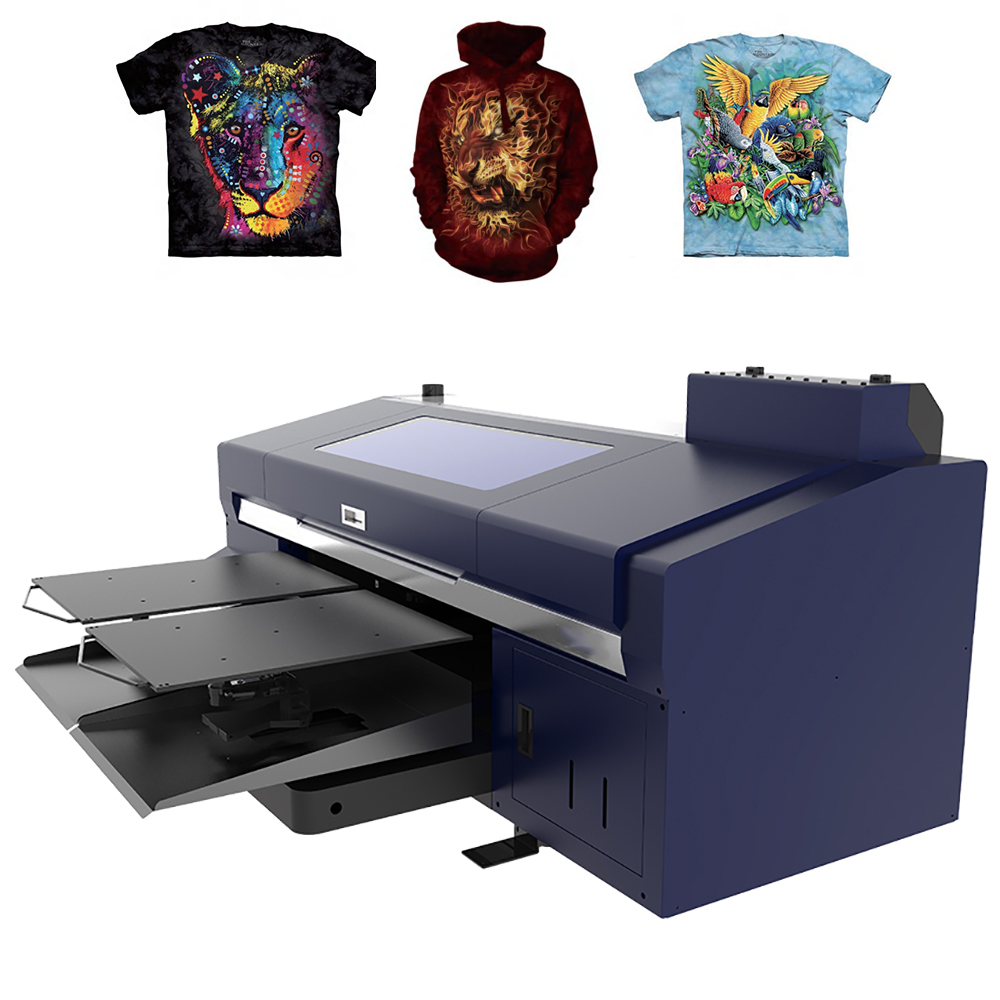
DTG works like a desktop inkjet printer – but instead of paper, it prints directly onto t-shirts, hoodies, tote bags, and other garments.
Feature How It Works
Print head Inkjet technology (Epson printheads are industry standard)
Ink Water-based textile pigment ink (no hand-feel)
Pre-treatment Light spray applied before printing (for cotton)
Curing Heat press (30–60 seconds) – ink bonds permanently
The result: A print that feels like part of the fabric, not a plastic layer stuck on top.
Why Global Customers Are Switching to DTG
- No Minimum Order Quantity (MOQ)
This is the #1 reason people buy DTG.
Screen printing: Setup takes 30–60 minutes. Makes sense for 100+ shirts. Makes zero sense for 1 shirt.
DTG: Setup takes 30 seconds (load design, load shirt). Print 1 shirt profitably. Print 500 shirts efficiently.
Who needs this:
· E-commerce stores (Print-on-demand fulfillment)
· Small boutiques (10–50 shirts per order)
· Promotional product companies (samples, small runs)
· Corporate teams (20 branded hoodies)
· Events & weddings (100 custom shirts)
“Last week I printed 1 shirt for a customer’s dog, then 300 shirts for a local marathon. Same machine. Same day.” – DTG shop owner, Texas
- Unlimited Colors – No Extra Cost
Screen printing charges per color. A 6-color design costs more than a 1-color design.
DTG prints full color, every time, at the same price.
Design Type Screen Print Cost DTG Cost
1-color text Low Same
6-color logo with gradients High Same
Photo-realistic image Impossible Same
All-over print (with limitations) Very high Same
Result: You can say “yes” to every design. No need to turn away complex artwork.
- Soft Hand-Feel – No Plastic “Crackle”
Old heat transfer vinyl (HTV) and cheap direct-to-film (DTF) prints feel like a thick sticker. They crack, peel, and trap heat.
DTG ink soaks into the fabric fibers.
· Feel: Like part of the shirt – not raised, not plastic
· Breathability: Air passes through normally
· Durability: 50+ washes without cracking (with proper pre-treatment and curing)
Premium brands demand this feel. You can charge more for DTG than for HTV or DTF.
- Print on Demand = Zero Inventory Risk
Traditional apparel business requires guessing what will sell. You order 144 shirts. Maybe 40 sell. You lose money.
DTG flips the model:
Traditional DTG Print-on-Demand
Buy blank shirts in bulk Buy blanks as orders come in
Store inventory No storage needed
Risk of unsold stock Zero risk
Wait 2 weeks for production Print & ship same day
This is why Shopify stores, Etsy sellers, and Amazon Merch sellers use DTG fulfillment services – or buy their own DTG printer to bring production in-house.
- Lower Barrier to Entry
A professional DTG printer with pre-treatment and heat press can cost $8,000–25,000.
Compare that to:
Equipment Approximate Cost
Automatic screen press $20,000–100,000+
Exposure unit, washout booth, dryer $10,000–30,000
Screen storage, chemicals, supplies Ongoing
Skilled labor Hard to find
DTG requires: One machine, one operator, one heat press. That’s it.
DTG vs. Other Apparel Decoration Methods
Method Best For Limitations
DTG 1–500 shirts, full color, soft feel, cotton Slow for 1000+ bulk, requires pre-treatment
Screen print 100+ shirts, simple colors, lowest per-unit cost High setup, color fees, hard to learn
DTF (Direct to Film) Small batches, any fabric, easy Plastic feel, less breathable
HTV / Vinyl Small text, single shirts, easy for beginners Thick feel, cracks over time
Sublimation Polyester only, all-over prints Cannot print on cotton
The sweet spot: DTG for soft, full-color, cotton-rich garments. DTF for polyester or tiny orders where you don’t want to pre-treat.
Who Is Buying DTG Printers Right Now?
Customer Type Why They Buy
Print-on-demand entrepreneurs Bring fulfillment in-house, increase margins
Existing screen print shops Offer short runs without tying up screens
Copy / print centers Add apparel to service menu
Etsy / Shopify sellers Print on demand, zero inventory
Promotional product distributors Samples and small orders in-house
Universities & schools Print event shirts on demand
Sports teams & leagues Add names/numbers to existing designs
Startup clothing brands Test designs without bulk orders
Real Numbers: What You Can Earn with DTG
Product Blank Cost DTG Ink + Pretreat Selling Price Profit
Gildan 5000 t-shirt $2.50 $1.00 $15–20 $11.50–16.50
Hoodie (Gildan 18500) $8.00 $1.50 $35–50 $25.50–40.50
Tote bag $1.00 $0.75 $10–15 $8.25–13.25
Youth t-shirt (bulk event) $2.00 $0.80 $8–10 $5.20–7.20
Break-even on a $15,000 DTG printer: Approximately 1,000–1,500 t-shirts at $12 average profit = 2–4 months for a busy shop.
Common Concerns – Addressed
“Is DTG slow?”
Entry-level DTG prints a shirt in 60–120 seconds. High-speed production models print 150–200 shirts per hour. For context: the fastest DTG machines rival automatic screen presses on runs under 500 pieces.
“Does DTG work on dark shirts?”
Yes. DTG machines print a white underbase, then color, then more white for opacity. Dark shirt printing requires more pre-treatment and ink, but results are excellent on quality machines.
“What fabrics work?”
Fabric DTG Compatibility
100% cotton Excellent (best results)
Cotton/poly blends (50/50 to 90/10) Good to excellent
100% polyester Poor (use DTF or sublimation instead)
Tri-blends (cotton/poly/rayon) Good
Bamboo, hemp, organic cotton Excellent
“Do I need pre-treatment?”
For light-colored shirts (white, pastel), some DTG inks print directly without pre-treatment. For dark shirts – yes, pre-treatment is required for white ink adhesion and opacity. Modern pre-treat machines make this a 30-second step.
Entry Level vs. Professional DTG: Which One?
Feature Entry Level ($5k–10k) Professional ($15k–30k)
Print speed 30–60 shirts/hour 100–200 shirts/hour
Max garment thickness 20mm 50mm+ (hoodies, jackets)
White ink quality Good Excellent
Automation Manual platen Auto platen, flattening
Best for 1–50 shirts/day 50–500 shirts/day
Our advice: If you have any doubt about volume, buy more machine than you need today. You will grow into it.
The Bottom Line: Is DTG Right for You?
Choose DTG if:
· You want to print 1–500 shirts profitably
· Your designs use full color, gradients, or photos
· You care about soft hand-feel (no plastic)
· You serve e-commerce, events, boutiques, or small brands
· You want to offer same-day or next-day turnaround
· You are starting an apparel brand and want to test designs without risk
Don’t choose DTG if:
· You only print polyester (choose sublimation or DTF)
· Your volume exceeds 1,000 shirts per design (choose screen print)
· You need the absolute lowest cost per shirt at high volume
FAQ: Dive into our all-encompassing frequently asked questions section, meticulously crafted to offer you a deep understanding of our extensive array of offerings. Empower your decision-making with unwavering confidence and clarity as you navigate through essential insights tailored just for you.
Q: What is the brand name of the large format printer? Uncover the legendary brand that represents exceptional printing excellence. Reveal the name that stands for unmatched quality and pioneering innovation.
A: The brand name of this extraordinary large format printer is Skydeeprinter, a symbol of excellence and reliability. Trust in a brand that consistently delivers extraordinary performance, backed by a legacy of proven success and dependability.
Q: Where is the large format printer manufactured? Discover the intriguing origins of our renowned machines and the outstanding craftsmanship that distinguishes them.
A: Proudly manufactured in CHINA, our large format printers are a testament to unparalleled quality, embodying the pinnacle of artisanal craftsmanship and precise engineering, setting a new industry benchmark.
Q: What is the certification of the large format printer? Empower your selection with our hallmark of distinguished and certified excellence.
A: Proudly bearing the prestigious CE certification, this large format printer not only meets but surpasses the highest standards of excellence, ensuring superior quality and unmatched performance.
Q: What are the packaging details of the large format printer? Delve into our steadfast dedication to secure and reliable packaging solutions.
A: Encased in a sturdy wooden frame and safeguarded by a protective waterproof film, our state-of-the-art large format printer is meticulously packaged to ensure ultimate safety during transit, delivering unparalleled peace of mind with every shipment.
Q: What are the payment terms for purchasing the large format printer?
A: To enhance your purchasing experience of this cutting-edge large format printer, we provide flexible payment terms via T/T, ensuring convenience and trust for a seamless transaction process.
